
Conscious parenting is being fully present, mindful, and aware in the way we raise our children. Instead of reacting out of habit or frustration, it’s about responding with understanding. When I first learned about the conscious parent approach, I realized parenting is not only about guiding children. It’s also about learning who we are through them.
What Is Conscious Parenting?
In simple terms, conscious parenting means being aware of your thoughts, emotions, and actions as a parent and how they affect your children. If we define consciousness, it’s the state of being awake, aware, and connected to the present moment. That awareness helps us see our kids as individuals with their own emotions, rather than extensions of ourselves.
The Conscious Parent Approach
Being mindful as a parent does not happen overnight. It’s about progress, not perfection. Conscious parenting invites us to pause, observe, and then act with intention. When we are aware of our triggers and reactions, we model emotional regulation for our children.
The conscious parent approach focuses on connection over control. Instead of using fear or punishment, we guide children through empathy, open conversation, and respect. It helps strengthen the parenting relationship while building emotional safety within the family.
Define Consciousness in Parenting
If you search for conscious meaning or what consciousness is, you will find many definitions. But when it comes to parenting, consciousness simply means being aware of yourself, your child, and the energy you bring into your home.

It’s not about being a “perfect” parent. It’s about being aware of your imperfections and working on them. Being aware of your emotions teaches your children to do the same.
When I became more mindful of my tone and body language, I noticed how my child mirrored my calmness. That’s when I understood the real meaning of being aware in parenting.
Why Conscious Parenting Matters for Children and Family
Children learn emotional intelligence not through lectures, but through observations. When we practice conscious parenting, we teach them how to communicate, handle disappointment, and express love in healthy ways.
In every family, emotions flow between parents and children. If we are anxious, angry, or disconnected, our children sense it. Research from the American Psychological Association highlights that a parent’s emotional state can directly influence a child’s behavior and level of stress (source).
By being mindful and emotionally aware, we give our family stability. The conscious parent helps create a safe space where every member feels heard, valued, and respected.
Building Stronger Family Connections
Strong family connections are built on trust and understanding. Conscious parenting reminds us that connection happens in small moments—when we listen without judgment or spend time together without distractions.
In my home, I started doing weekly “check-ins.” We talk about our week, what went well, and what did not. These open conversations help build empathy and remind everyone that feelings matter. It’s a simple way to strengthen our relationship with parents, children, and even between siblings.
Breaking the Habit of Being Yourself
This idea comes from Dr. Joe Dispenza’s work, Breaking the Habit of Being Yourself, which teaches how to rewire old habits. Parenting often brings out patterns we learned in our own childhood—some helpful, some not.

Conscious parenting asks us to question those automatic reactions. Are we yelling because we are angry, or because that’s what we saw growing up? Once we become aware of those patterns, we can replace them with more mindful and loving behaviors.
Core Principles of Being a Conscious Parent
Awareness—Be aware of your triggers, emotions, and expectations.
Mindfulness—Stay present instead of rushing to fix or control.
Empathy—Listen and understand before responding.
Self-care—You cannot pour from an empty cup.
Intentional action—choose responses that align with your values.
Core Principles of Being a Conscious Parent
Being Mindful and Well Aware
To be mindful means to notice your inner state before reacting. When your child misbehaves, take a deep breath before speaking. Ask yourself, “What message am I sending right now?”
Being aware does not mean being hyper-aware or overanalyzing every move. It means paying gentle attention to your words, your child’s tone, and the energy in the room.
Modeling Respect and Emotional Authenticity
Our children learn more from how we act than what we say. If I model respect—speaking gently, acknowledging my mistakes, being emotionally authentic—my child learns what respect means. When we show emotional authenticity (e.g., “I’m sad because…”), children learn to honor feelings rather than bury them.
Using Non-Violent Communication
Conscious parenting emphasizes communication free from blame, shame, or aggression. Instead of “Why did you do that again!” I might say, “I say, ‘I feel upset because I value our time together, and I noticed you walked away when I asked. Can you tell me what you were thinking?” This style strengthens the connection rather than inducing fear.
How to Be Mindful: Practical Mindfulness Exercises for Parents
Mindfulness Breathing Exercises
Here’s a simple routine. When you wake up, take three slow breaths, noticing your chest is rising and falling, your feet on the floor. When you are in a challenging moment with your child, pause for a count of five, breathe, then respond. These mindfulness breathing exercises help you anchor in yourself before engaging with your child.
Being in the Moment with Your Children
Put away your phone for a few minutes each day. Observe your child playing, or just listen. Being fully present tells them, “You matter.”
Mindfulness meditation can also help you regulate emotions, reduce burnout, and build patience—qualities every conscious parent needs.
Key Elements of the Conscious Parenting Style
Open Communication and Involvement
Children involved in decision-making age appropriately—feel seen and valued. I ask for input: “Which book shall we read tonight?” or “What snack would you like?” That builds involvement rather than dictation. Conscious parenting thrives on inviting rather than ordering.
Setting Healthy Boundaries with Love
Setting boundaries is not conscious parenting. It enhances it. When I say, “We will be in bed by eight so you get enough rest for school,” that boundary is clear. Then I explain, “I set this because I love you and want you to feel good tomorrow.” Love + boundary = safe structure.
Encouraging Self-Expression
Rather than feeling uncomfortable with individuality, conscious parenting invites it. My child chose a weird outfit one day: green sneakers with pink socks and a print shirt. Instead of “you will look ridiculous,” I said, “I like your creativity—tell me why you chose this combo.” That moment celebrated self-expression and built confidence.
Breaking Generational Patterns
My own upbringing had strong discipline and little emotional checking in. In practicing conscious parenting, I realized I was repeating those habits unconsciously.
So I intentionally said, “I was raised this way, and I am choosing differently so you can feel safe to express your whole self.” Creating new traditions, weekend walks, family check-ins, and gratitude sharing to break the cycle. It’s slow work but deeply rewarding.
Letting Go of Old Parenting Models
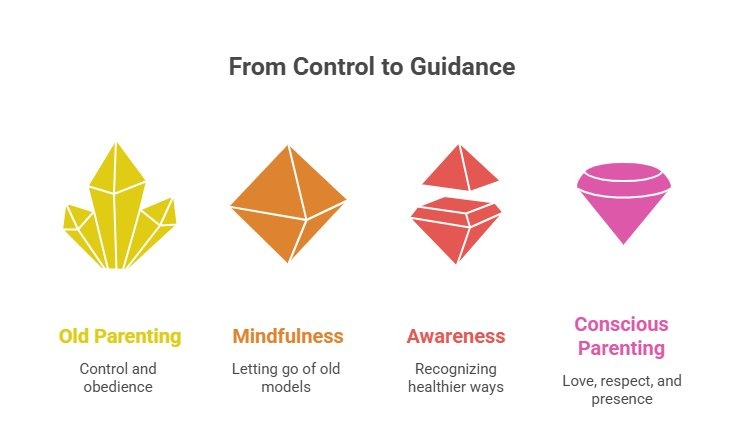
If you ask what consciousness is in this context, it’s letting go of old models (“children must obey or else”), stepping into being mindful, and being aware of healthier ways. Conscious parenting invites us to move away from “I must control you for your own good” toward “I will guide you with love, respect, and presence.” That shift feels gentle but powerful.
Creating New Traditions
We started a “Sunday Story and Share” where each person picks a story and then shares a reflection. This new tradition supports emotional intelligence, connection, and fun. Through mindful rituals, conscious parenting becomes part of family culture, not just an idea.
Conscious Parenting vs. Other Parenting Styles
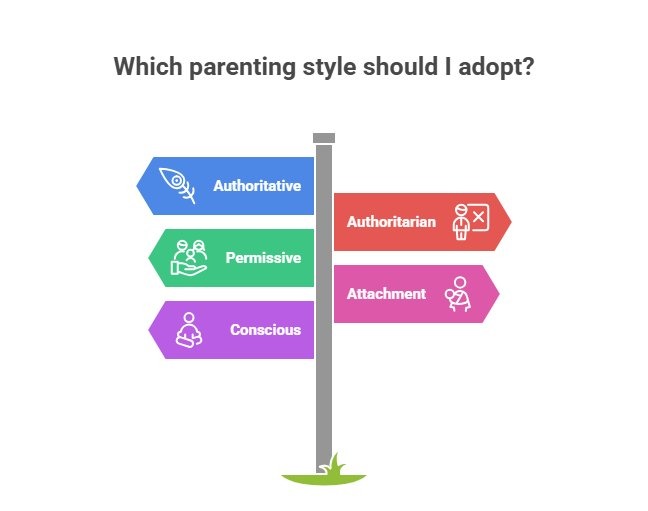
There are many parenting styles: authoritative, authoritarian, permissive, and attachment. But conscious parenting stands out because it emphasizes the parent’s internal world as much as the child’s. As one expert notes, conscious parenting focuses on the parent’s self-awareness and regulation, while other styles may focus more on the child’s behavior.
The Parenting. While gentle parenting emphasizes empathy and connection, conscious parenting adds the layer of self-awareness. While attachment parenting emphasizes closeness and responsiveness, conscious parenting emphasizes presence, authenticity, and emotional awareness.
Why Connection Matters More Than Control
In my experience, children respond better when they feel seen and understood than when they are simply controlled. When you shift from “You must do this” to “Let’s do this together,” the relationship will deepen. According to conscious parenting, a relationship is the vessel that promotes growth, not just rules.
Common Misconceptions
“Conscious parenting means no discipline.” Not true. It actually means different disciplines: mindful, respectful, boundary-based, and not punitive.
“It’s permissive.” No. Boundaries, structure, and limits remain. The difference is how we engage with them.
“It takes too long.” Yes, it takes time, and yes, it’s worth it. You will build trust, emotional intelligence, and resilience.
“It means the parent is perfect.” No parent is perfect. Conscious parenting means you are aware of your imperfections and willing to learn.
Moving Forward: Creating a More Mindful Family Life
1- Here’s what I suggest for your next steps:
2- Pick a mindfulness breathing exercise to start your day.
3- Have a five-minute check-in with your child each day—no screen, full attention.
4- Next time you feel triggered, pause and ask, “What’s going on inside me?” Then respond rather than react.
5- Define one family boundary with love and explain the why behind it.
6- Encourage your child’s voice and ask for their input; notice their feelings.
7- Reflect weekly: What did I model this week? Was I well aware of my reactions? What do I want to try differently?
Frequently Asked Questions
What does conscious parenting look like with a toddler?
Even with toddlers, you can be consciously present: get down to their level, use simple words to describe feelings, set gentle boundaries (“The toy stays on the floor so we do not step on it”), and model calm breathing when frustration appears.
Does conscious parenting work with teens?
Absolutely. With teens, it’s about connection more than control. Invite conversation, ask for their input, and show your vulnerability (“I do not have all the answers”)—that builds trust and emotional intelligence.
How much time does it take to see change?
One week of small shifts can show change. One study found that mindful parenting improved family functioning within a few months. PMC But be gentle with yourself: it’s a journey, not a perfect destination.
Is conscious parenting suitable for all families?
Yes, but adapt it to your context. If you have high stress, limited time, or specific developmental challenges, start small: one mindful moment per day, one boundary explained with love.
Conclusion
If you are here, reading this, you are already taking a step into something meaningful. The path of conscious parenting requires courage: to look inward, to change your reactions, and to invite a deeper connection with your child.
Use the keywords “conscious parenting,” “being mindful,” “being in the moment,” and “well aware,” with “aware” meaning—not as jargon, but as intention markers. You do not need to overhaul everything overnight. As I found, one mindful breath at a time, one conversation, and one new tradition create ripples. Your children see you—not just what you do, but who you are. And in that awareness lies transformation.
References
Duncan, L. G., Coatsworth, J. D., & Greenberg, M. T. (2009). A Model of Mindful Parenting: Implications for Parent–Child Relationships and Prevention Research. Clinical Child and Family Psychology Review, 12(3), 255-270. PMC
URL: https://www.ncbi.nlm.nih.gov/pmc/articles/PMC2730447/
Van der Oord, S., de Jong, P. J., & van der Meer, J. M. (2012). The Effectiveness of Mindfulness Training for Children with ADHD and Parallel Mindful Parenting Training for Their Parents. Journal of Child and Family Studies, 21(1), 139-147. PMC
Burgdorf, V. A., Szabó, B., & Abbott, M. (2021). A Review of Mindful Parenting: Theory, Measurement, Correlates, and Outcomes. Mindfulness, 12, 1330–1357. SAGE Journals
May, R., et al. (2021). The Efficacy of Mindful Parenting Interventions: A Systematic Review. Journal of Child and Family Studies. PubMed
Chapman, J., & Stein, A. (2021). Social and Emotional Learning for Parents through Conscious Discipline. Journal of Research in Innovative Teaching & Learning, 12(1).