
When I first became a mother to my son, I had no idea how profoundly this relationship would reshape my understanding of love, connection, and identity. The bond between a mother and son is not just another family relationship.
It is something entirely different, deeper, and more transformative than I ever imagined. I have spent years observing, experiencing, and researching what makes the mother and son relationship so unique. What I discovered goes far beyond sentiment or tradition.
What Makes the Mother and Son Relationship Special?
The relationship between mother and son carries a weight and texture that distinguishes it from other family bonds. I have found that mothers often describe their connection with sons as more physically intense, almost primal. There is a tenderness mixed with a fierce protectiveness that feels instinctive.
Research published by the National Institute of Child Health and Human Development confirms that maternal bonding has a measurable influence on a child’s neurological and emotional development. But with sons, this bond seems to operate on an additional frequency. Mothers report feeling their sons’ emotions as if they were their own, a phenomenon that highlights the depth of the mother-child bond.
What makes the mother-to-son relationship particularly powerful is its role in shaping how boys understand love, boundaries, and their own masculinity. I have watched this unfold not only in my own life but also in countless families where the mother becomes the first woman a boy learns to trust, respect, and eventually, separate from.
The Molecular Connection: Science Behind the Mom Son Bond
Here is something that stopped me in my tracks when I first read about it: a study published in PLOS ONE found that male fetal cells can cross the placental barrier and remain in a mother’s brain for decades, possibly for life. This means that when you carry a son, he literally becomes part of your neural architecture.
The science reveals
- 63 percent of women carry male DNA in their brains from their sons
- These cells cross the blood-brain barrier during pregnancy
- The cells scatter throughout the maternal brain and remain for life
- This creates a biological foundation for the bond mother and child share
In my experience, this explains why so many mothers describe an almost psychic connection with their sons. It is not just emotional attunement. There is a physiological imprint, a cellular memory that ties mother and son together in ways we are only beginning to understand.
Yin and Yang: The Balance Between Mother and Son
I have always been fascinated by the concept of Yin and Yang, the idea that opposite forces create balance and wholeness. The mother son bond embodies this principle perfectly:
- Mothers bring nurturing, intuition, and emotional depth
- Sons bring energy, curiosity, and a different way of seeing the world
- These complementary opposites complete each other rather than oppose
According to the principles outlined by the Encyclopedia Britannica on Yin-Yang philosophy, these forces do not conflict but create harmony. I have seen this play out in real time. When I lean into the differences between my son and me, rather than trying to mold him into something familiar, the relationship flourishes.
Psychiatrist Carl Jung believed that human beings are interconnected through shared experiences and archetypes. His theories suggest that the mother son relationship taps into something universal, a dynamic that transcends individual families and connects us to generations past. This is why the love between mother and son often feels timeless.
The Power of Mother Love in a Son’s Development
Mother love is not soft or weak. It is one of the most formidable forces in shaping a young man’s trajectory. I have watched sons flourish under the steady presence of maternal support, and I have also seen the consequences when that support is absent or distorted.
Studies from the Centers for Disease Control and Prevention show that children who experience secure attachments early in life have better outcomes:
- Improved emotional regulation
- Enhanced social skills
- Better mental health throughout life
- Stronger ability to navigate intimacy and vulnerability
What I discovered is that a mother’s love with her son does not create dependency when done right. Instead, it builds the kind of inner security that allows a boy to take risks, fail, learn, and grow without fear of losing his worth. This is the paradox: the stronger the mother-son bond, the more capable the son becomes of standing on his own.
Building Confidence and Independence
I used to worry that being too involved in my son’s life would make him dependent or overly attached. Then I learned something critical: maternal support does not weaken boys. It strengthens them. Research from the American Psychological Association demonstrates that boys with involved mothers show higher levels of self-esteem and resilience.
Here is what happens when a mother actively supports her son
- She becomes his safe base, the place he returns to after exploring the world
- This does not mean hovering or controlling, but being present and affirming his efforts

- She helps him process failure without shame and celebrates his courage to try
- Sons develop agency because they know their worth is not conditional
I have found that sons who feel supported by their mothers are more willing to try new things. They ask questions, pursue interests, and develop a sense of confidence. The love of a son for his mother deepens when he realizes she believes in him even when he doubts himself.
How the Bond Between Mother and Child Shapes Emotional Intelligence
Emotional intelligence is not something boys naturally develop in isolation. It is learned through relationships, and the mother son relationship is the primary classroom. I have seen this firsthand. Boys who have mothers who name emotions, validate feelings, and model empathy grow into men who can do the same.
According to research from the University of Reading, boys with secure maternal attachments exhibit:
- Fewer behavioral problems
- Higher emotional intelligence
- Better ability to identify and communicate emotions
- Stronger capacity to respond to others with sensitivity
- Improved conflict resolution and interpersonal skills
In my experience, the mother and son bond teaches boys that vulnerability is not weakness. When a mother responds to her son’s tears with compassion rather than dismissal, she permits him to be fully human. This is the foundation for healthy relationships, effective leadership, and mental well-being in adulthood.
The Relationship Between Mother and Son vs. Mother and Daughter
I have often heard people say that mothers understand daughters better because they share the same gender. While there is some truth to this, I have found that the mother and son relationship offers something equally profound, just different in nature.
Key differences include
- With daughters, mothers often see themselves reflected
- With sons, mothers enter unfamiliar territory that requires learning
- The son and mother relationship requires stepping outside one’s own experience
- This creates opportunities for growth unique to raising boys
Research published by Oxford University suggests that mother-son attachment plays a critical role in reducing high-risk behaviors in boys. The mother and son bond creates a motivational anchor. Boys want to maintain that connection, which drives them to make better choices. This is not about control. It is about influence rooted in love.
Navigating the Uncharted Territory of Raising Sons
Raising a son is like learning a new language. I did not grow up as a boy, so I had to learn what my son needed, how he processed emotions, and what made him feel safe. This required humility and curiosity, two qualities that deepen the mother to son relationship rather than weaken it.
I discovered that boys crave
- Structure and clear expectations that help them feel secure
- Physical affection expressed through hugs, roughhousing, and active play
- Love is demonstrated through action as much as words
- Space to explore and test boundaries safely
What I learned is that the best thing I could do was listen more and assume less. Every son is different, and the moms and sons who build the strongest bonds are the ones who treat the relationship as a collaboration, not a one-way street. This is how trust is built, and trust is the bedrock of everything.
Benefits of a Strong Mother-Son Relationship
The benefits of a healthy mother-son relationship extend far beyond childhood. I have seen how the foundation laid in early years continues to pay dividends throughout a man’s life. Sons who feel securely attached to their mothers carry that sense of worth into their careers, friendships, and romantic relationships.
According to data from the U.S. Department of Health and Human Services, children with strong parental bonds show:
- Better academic performance
- Fewer mental health issues
- Greater social competence
- Stronger emotional regulation
- More successful relationships in adulthood
Here is what I have observed: sons who grow up with a strong mom-son bond are not weak or dependent. They are confident, emotionally intelligent, and capable of forming deep, meaningful connections with others. The bond between mother and son lasts a lifetime, and its effects ripple outward in ways that benefit not just the son but everyone he encounters.
Academic and Social Success Through Mom Son Bond
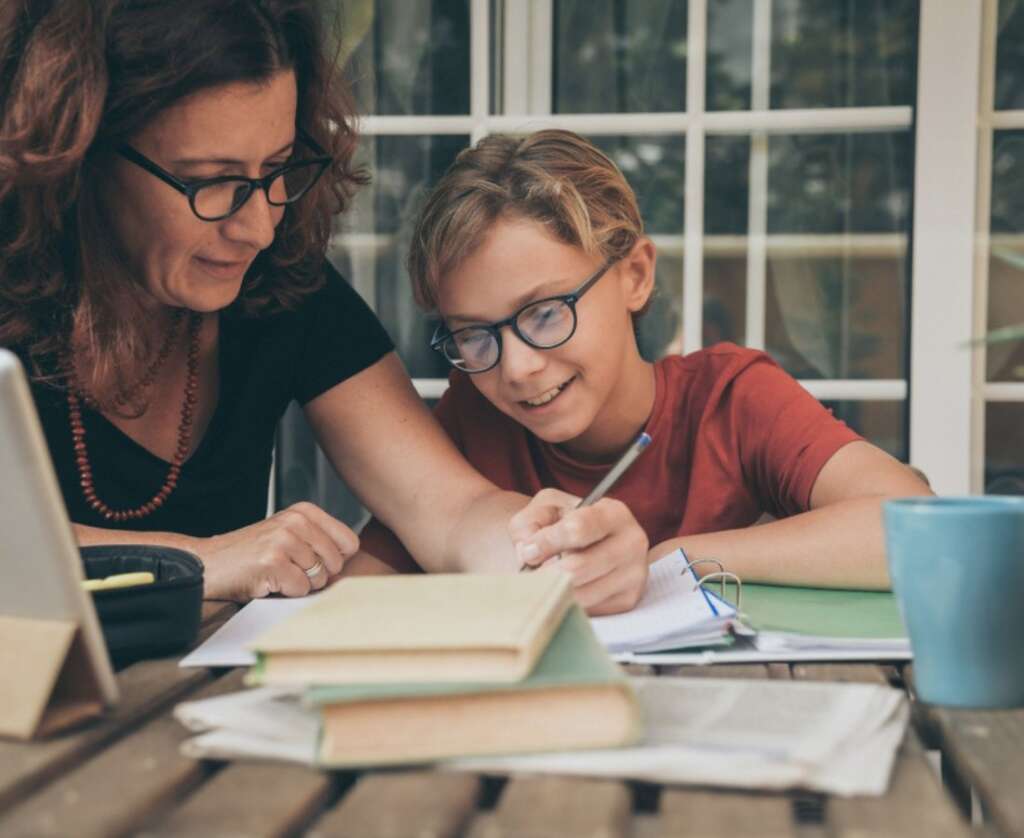
I have watched sons thrive academically when their mothers stay actively involved in their education. This does not mean doing their homework for them. It means showing up, asking questions, and communicating that their learning matters. Research from the University of Essex found that boys who spend quality time with their mothers score 20 to 40 percent higher in social and cognitive development.
The mother son relationship builds academic success through:
- Enhanced verbal skills and vocabulary development
- Stronger critical thinking abilities
- Better emotional regulation capacity
- Increased willingness to take academic risks
- Greater confidence in asking questions and seeking help
In my experience, sons who feel supported by their mothers are more willing to pursue challenging subjects and recover from setbacks because they know their value is not tied to perfection. The mom love for son creates a safety net that allows for exploration and growth.
Reducing High-Risk Behaviors: How Mothers Keep Sons Grounded
One of the most significant findings I came across was research from Oxford Pediatrics showing that close mother-son attachment significantly reduces the likelihood of boys engaging in high-risk behaviors. This includes substance abuse, violence, delinquency, and risky sexual activity.
Here is why this matters. Boys who feel connected to their mothers have:
- Something meaningful to protect
- An internal compass and sense of responsibility
- A desire to honor the relationship
- Guidance that keeps them grounded during turbulent years
I have seen this play out in families where the son and mother bond is strong. Even when peer pressure is intense, these boys have a reference point that reminds them of their values, an internal voice that guides decision-making, and a sense of accountability rooted in love rather than fear.
The Tender Reality of Being a Boy Mom
Being a boy mom is not what I expected. I thought it would be all rough-and-tumble chaos, and while there is plenty of that, there is also an unexpected tenderness:
- My son hugs me without prompting
- He tells me he loves me in front of his friends
- He falls asleep on my shoulder even as he grows taller than me
This is the reality that defies the stereotypes. Boys are not emotionally limited or incapable of deep connection. In fact, the love mother and son share is often expressed with a raw, uncomplicated honesty that can take your breath away. I have learned that boys need emotional connection just as much as girls do; they just express it differently.
What I discovered is that the bond between a mother and son is both fierce and gentle, wild and tender. It is a relationship that teaches mothers as much as it teaches sons. I have become more patient, more curious, and more willing to embrace the unknown because my son has shown me the value of living fully in the moment.
Breaking Stereotypes: Beyond the “Mama’s Boy” Label
The term “mama’s boy” is often used as an insult, implying weakness or dependence. I have come to reject this characterization entirely. A close mother and son relationship does not produce weak men. It produces strong, emotionally intelligent men who know how to love and be loved.
Research from the National Institutes of Health supports this. Boys who maintain close relationships with their mothers throughout adolescence and into adulthood report:
- Higher life satisfaction
- Better relationship quality
- Greater emotional well-being
- Stronger sense of self-worth
- More successful careers and friendships
In my experience, the sons who are closest to their mothers are often the most independent. They have the confidence to pursue their goals, the emotional intelligence to navigate challenges, and the security to form healthy relationships because they understand what love looks like. The mom loves me message a son receives from his mother becomes the template for how he expects to be treated and how he treats others.
When the Mother and Son Bond Becomes Disturbed
Not all mother and son relationships are healthy. I have seen cases where the bond becomes distorted, where love turns into control, and where closeness becomes suffocation. This is the shadow side of the mother-son relationship, and it is important to acknowledge it.
A disturbed mother-son relationship often stems from unmet emotional needs on the mother’s part. When a mother looks to her son to fill the role of a partner, confidant, or emotional caretaker, the dynamic becomes unhealthy. According to attachment theory developed by John Bowlby, this reversal of roles can have lasting consequences on a son’s development.
Here is what I have learned. The bond between mother and son must have boundaries. Love without boundaries becomes enmeshment, and enmeshment prevents a son from developing his own identity. I have seen adult men who struggle with relationships, decision-making, and self-worth because they were never allowed to separate from their mothers psychologically.
Warning Signs of an Unhealthy Mother Son Relationship
Recognizing the signs of a disturbed mother and son bond is the first step toward healing. I have identified several patterns that indicate the relationship has crossed into unhealthy territory:
- Chronic guilt when the son tries to set boundaries
- Decision-making paralysis and inability to make independent choices
- Difficulty forming or maintaining romantic relationships
- Son feels responsible for his mother’s emotional well-being
- Struggle with a sense of masculinity and self-identity
- Feeling “small” or “lost” outside the relationship
- Over-adaptation or emotional coldness in partnerships
- Repeating unhealthy patterns in the next generation
Research from the Substance Abuse and Mental Health Services Administration shows that children who take on adult emotional roles experience higher rates of anxiety, depression, and relationship difficulties in adulthood. The love between mother and son, when distorted, can become a cage rather than a foundation.
Healing and Rebuilding the Relationship Between Mother and Son
Healing a disturbed mother-son relationship requires courage, honesty, and often professional support. I have found that therapy, particularly attachment-based or family systems therapy, can provide the framework for untangling unhealthy patterns. Resources from the U.S. Department of Health and Human Services offer guidance on finding qualified mental health professionals.
The first step is recognizing the patterns. Steps toward healing include
- Mothers are examining their own unmet needs and how they may be using their sons emotionally
- Sons learning to set boundaries without guilt, understanding separation is not abandonment
- Both parties are committed to honest communication and mutual respect
- Seeking professional therapeutic support when needed
- Grieving the relationship that was to build what can be
I have seen relationships transform when both parties commit to change. It is not easy, and it requires vulnerability and persistence. But the bond between a mother and son is resilient. With effort, honesty, and support, it can be rebuilt on a foundation of mutual respect and healthy love.
What makes the bond between a mother and son so special?
The bond between a mother and son is unique due to biological connections, including male fetal DNA remaining in the mother’s brain, combined with emotional depth that shapes a son’s identity and future relationships.
How does a strong mother son relationship benefit a son’s development?
A strong mother-son relationship enhances emotional intelligence, academic performance, social skills, and reduces high-risk behaviors by providing a secure attachment and moral foundation.
Can a mother and son relationship become unhealthy?
Yes, when boundaries blur and the mother uses the son for emotional support or control, the relationship can become enmeshed, leading to guilt, dependence, and difficulty forming independent relationships.
How can a disturbed mother son bond be healed?
Healing requires recognizing unhealthy patterns, setting clear boundaries, seeking professional therapy, and committing to rebuilding the relationship based on mutual respect and emotional health.
Conclusion
The bond between a mother and son is one of the most powerful relationships in human experience, rooted in biology, shaped by emotion, and capable of influencing every aspect of a man’s life.
From the molecular connection that begins in the womb to the emotional scaffolding that supports academic success, emotional intelligence, and healthy relationships, the mother and son relationship is foundational. I have learned that this bond thrives on balance, requiring both closeness and boundaries, tenderness and strength.
When nurtured with intention and respect, the love between mother and son becomes a lifelong source of support, identity, and resilience. Whether you are a mother raising a son or a son reflecting on this relationship, understanding its depth and complexity is the first step toward honoring and strengthening it for generations to come.