
Learn how empathy-based parenting builds stronger connections, reduces anxiety, and helps your kids grow well.
Understanding What Is Gentle Parenting
I have found that gentle parenting is also one of those terms that sounds almost simple until you actually start practicing it. Gentle parenting is raising children with empathy, respect, understanding, and clear boundaries. It’s about treating kids as whole people with feelings, not small versions of adults who need to be controlled.
According to experts, the biggest misconception about gentle parenting is being soft or permissive. That could not be the entire truth. I have watched parents using this approach and still continue to stay confident, with consistent boundaries. The difference is how those boundaries are communicated and why they are enforced.
The Four Pillars of This Parenting Style
According to research from the American Psychological Association, effective parenting styles include empathy and structure. For your clear understanding, I am going to divide gentle parenting into four key components:
- Empathy: It involves understanding your child’s perspective and trying to acknowledge their emotions as real and valid.
- Respect: Treating a child with the same respect you give to another person.
- Understanding: It means trying to understand the root cause of behavior, not just reacting to it or providing solutions.
- Boundaries: It involves setting clear, consistent limits while politely explaining to children the reasons for the limits.
Gentle Parenting vs Traditional Parenting
Basically, the traditional methods depend more on punishment and rewards. If a child misbehaves, parents take strict action instantly. Opposite to it, if a child behaves well, they earn a reward from their parents. It’s based on give and take.
Gentle parenting flips this script. Instead of asking, “How do I make this behavior stop right now?” You can ask, “What is my child trying to communicate? What skills do they need to handle this better?”

Let me give you a practical example. Your 5-year-old refuses to put on their shoes to leave for school. Traditional parenting might involve raised voices, threats, or consequences. With gentle parenting, you pause, get down to their eye level, and ask, “What’s making this hard for you right now?” Maybe they are worried about something at school. Maybe the shoes feel uncomfortable. Maybe they are not ready to leave their comfort zone.
Psychology of Effective Parenting Styles
I have looked at parenting styles and psychology research, and here’s what matters: Studies consistently show that authoritative parenting (which gentle parenting resembles) produces the best outcomes for kids.
According to research published by the APA, this balanced approach helps children develop better emotional regulation, higher self-esteem, and fewer behavioral problems. This is not because kids fear consequences. It’s because they understand them.
Gentle Parenting Techniques
As a parent, combine patience and guidance to raise emotionally healthy, responsible kids for a better future.
Positive Discipline as the Foundation
When I first learned about positive discipline within gentle parenting, it seemed almost too simple. The idea is that discipline means teaching, not punishing. You have to know parents shift from saying “Stop throwing your food or you will be punished” to “I see you are feeling playful. Food stays on your plate.
Would you like to do something else with your hands during dinner?” It takes longer. It requires more presence. But kids actually learn faster because they understand the reasoning.
Essential Parenting Skills
In my experience, parenting skills that make gentle parenting work include:
- Active listening without trying to fix everything immediately
- Validating feelings while maintaining boundaries on behavior
- Staying calm during moments when your frustration is sky-high
- Offering age-appropriate choices within clear limits
- Following through consistently on what you have promised
Talking With Parents: Communication Strategies
I have found that talking with parents (both your co-parent and other caregivers) is essential. You need an understanding of the way you approach something. Families struggle when one parent practices gentle parenting while the other yells and uses threats. The mixed messages confuse kids and weaken the entire approach.
Here’s what actually works: sit down with your partner or co-parent and discuss what you are trying to complete. Get on the same page about boundaries, consequences, and how you will handle difficult moments together.
Raising Children With Real-World Applications
Turn daily experiences, including social, academic learning, and emotional experiences, into learning opportunities for your kids.
Teaching Young Children Emotional Awareness
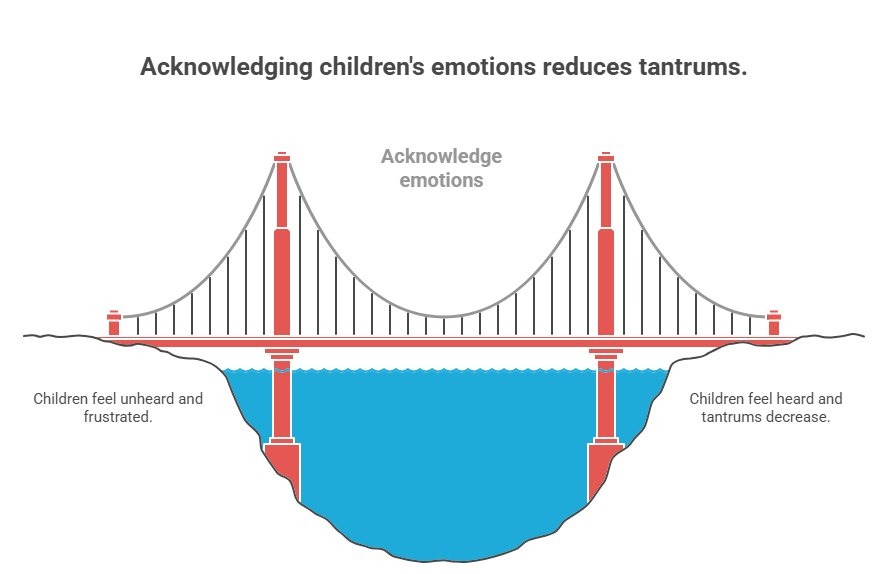
When teaching young children about their emotions, naming feelings is the first step. A simple phrase like “I see you are frustrated” does wonders. You are not ignoring or rejecting their emotion.
You are acknowledging it exists. In my experience, this approach reduces tantrums faster than punishments ever could. Kids feel heard.
Handling Common Challenging Situations
After working through different scenarios where gentle parenting techniques shine:
- Tantrums: Parents should stay calm, keep their child safe, and validate their feelings after they have calmed down.
- Sibling conflicts: Help the children to communicate instead of immediately announcing the punishment against the “aggressor.”
- Boundary testing: Hold firm and explain to your child why the boundary exists.
- Dangerous situations: Remove the child from danger, and after this, explain the consequences to the children calmly.
The Evidence: What Research Says About Parenting Styles Theory
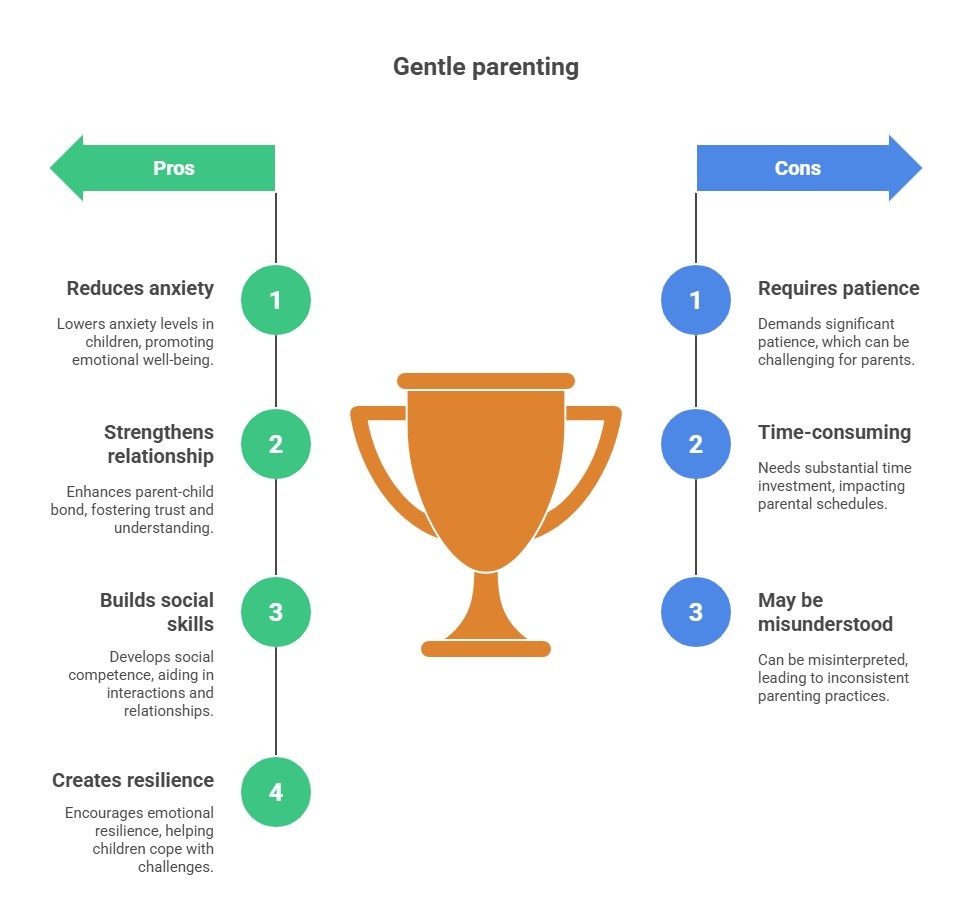
Research on gentle parenting, when implemented as part of an important parenting style, the authoritative parenting approach, reduces anxiety levels in children. A study referenced by Parents Magazine showed that this approach promotes controlled and balanced reactions in social contexts, particularly in shy toddlers.
Evidence that it strengthens is the parent-child relationship, builds social skills, and creates more emotionally resilient kids. These are not observations of small stories. They are measurable outcomes.
Understanding Different Parenting Styles
Here are the four main categories of parenting styles:
- Authoritarian: High control, low warmth. “Because I said so.”
- Authoritative: High control, high warmth. Clear boundaries plus emotional connection
- Permissive: Low control, high warmth. Love without structure
- Neglectful: Low control, low warmth. Uninvolved and unavailable
Gentle parenting sits firmly in the authoritative category, though it emphasizes the emotional connection more clearly.
Challenges
Modern parents are trying to maintain the balance between empathy and discipline.
Why Gentle Parenting Requires Significant Investment
Gentle parenting demands time, patience, and emotional energy. You cannot avoid it or escape it. You cannot effectively use this parenting method if you are rushing out the door, exhausted, or emotionally drained or empty.
In my experience, parents often experience burnout because they are trying to maintain perfect emotional regulation while managing their own triggers and stress. Here’s the truth: you will not be perfect. I have yelled at my kids. I have lost patience. That does not mean the approach failed. It means I am human.
Common Misconceptions That Create Confusion
I have heard every concern about gentle parenting. “Isn’t it too permissive?” “Will my kids think I am a controller?” “Do not children need harsh consequences?” Here’s what I learned:
- Gentle parenting includes firm boundaries. It’s not permissive.
- Discipline teaches. Punishment suppresses. You need to maintain discipline.
- Kids actually respect parents more when they feel heard and understood.
- Consequences work better when kids understand the reasoning.
Making Gentle Parenting Work for Your Family
Discover simple ways to make empathy and boundaries that work for all family members.
Conscious Parenting and Self-Awareness
Conscious parenting is the foundation of this entire approach. It means checking in with yourself and asking hard questions: What triggered my reaction? Am I responding to my own childhood wounds? What kind of parent do I actually want to be? This self-reflection is not optional. It’s essential to the work.

Empowering Parents Through Parenting Advice That Works
Here’s the parenting advice I give to families starting this journey: begin small. Do not over-examine your entire approach overnight. Pick one area. Master it. Then expand. Stay consistent. Set clear expectations. Work as a team with your co-parent. And give yourself grace when you mess up.
1. Will my kids think I am weak if I do not punish them?
No. Kids actually respect you more when you stay calm and explain things. They see staying in control of their emotions as a strength, not a weakness. Punishment comes from losing control; boundaries come from knowing what you stand for.
2. Is gentle parenting just letting my kids do whatever they want?
No. Gentle parenting has firm boundaries. The difference is how you enforce them. You’re explaining why rules exist instead of just saying, “Because I said so.” Kids listen better when they understand the reasoning.
3. What do I do when I am too frustrated to stay calm?
Step away for 30 seconds and take a breath. Tell your kid, “I need a moment to calm down.” That’s not failure. It’s teaching them that adults have big feelings too and need to manage them.
4. Will gentle parenting work with a strong-willed child?
Yes, often better than with other kids. Strong-willed children respond well to being heard and understanding the “why” behind rules. You are not crushing their spirit. You’re teaching them how to use their determination wisely.
Conclusion
I have worked with many families on this journey, and I must be honest: gentle parenting will not solve everything. Some kids will still struggle. Some days will still be hard. But the research backs it up. This parenting approach actually works because it respects who your kids are while giving them the structure they need to grow.
You do not have to do it perfectly or follow every rule exactly. Use what works for your family and leave the rest. What really matters is that your kids feel like they matter to you. When they know you see them, hear them, and get them, they grow into stronger people who know how to handle life’s challenges.
References and Further Reading
Continue your learning journey through these helpful resources.
Scientific Research on Gentle Parenting and Authoritative Parenting
- American Psychological Association. (2024). “Parenting Styles and Child Development.” Retrieved from https://www.apa.org/
- American Psychological Association. (2021). “Positive Parenting: Public Service Announcement.” Retrieved from https://www.apa.org/science/about/psa/parenting
- Baumrind, D. (1991). “The Influence of Parenting Style on Adolescent Competence and Substance Use.” Journal of Early Adolescence, 11(1), 56-95.
- Sanders, M. R., & Mazzuchelli, T. G. (2017). “The Promotion of Wellbeing and Prevention of Depression in Parents of Young Children.” In J. R. Z. Abela & B. E. Hankin (Eds.), Handbook of depression in children and adolescents (pp. 355-382). Guilford Press.
Popular Resources on Gentle Parenting
- Ockwell-Smith, S. (2016). The Gentle Parenting Book: How to Raise Calmer, Happier Children from Birth to Seven. Piatkus.
- Kennedy, B. (2022). Good Inside: A Guide to Becoming the Parent You Want to Be. HarperWave.
- Parents Magazine. (2023). “What Is Gentle Parenting?” Retrieved from https://www.parents.com/
Government and Health Organization Resources
- CDC’s Positive Parenting Strategies. Retrieved from https://www.cdc.gov/
- American Academy of Pediatrics (AAP). “Healthy Children.” Retrieved from https://www.healthychildren.org/
- UNICEF. (2020). “Positive Parenting: A Guide for Parents.” Retrieved from https://www.unicef.org/