
I will never forget the morning my neighbor called me in tears. Her 18-month-old had been screaming at daycare drop-offs for three weeks straight. “Am I damaging him?” she asked. Here’s what I have learned: Separation anxiety in children is one of the most misunderstood aspects of early childhood development.
What Is Separation Anxiety in Children?
Separation anxiety in children is intense worry and distress when a child is separated from their parents or primary caregivers. But here’s the part that surprises most parents: it’s actually a sign of healthy attachment. When your baby clings to your leg and sobs, they are demonstrating that they have formed a meaningful bond with you.
Normal Developmental Separation Anxiety vs. Separation Anxiety Disorder
Here’s the critical distinction: most separation anxiety is completely normal. Normal separation anxiety typically starts around 6 months, peaks between 10 and 18 months, and gradually fades by age 2-3. Separation anxiety disorder is different.
The symptoms last at least four weeks. cause significant distress, and seriously impair your child’s ability to function. I have seen children refuse to attend school for months or develop panic attacks.
When Does Separation Anxiety Start?
Here are the key stages when separation anxiety usually begins and develops.
Separation Anxiety in Babies (6-12 Months)
Baby separation anxiety usually kicks in around 8-9 months, though I have seen it as early as 4-5 months. This timing is similar to object permanence. It is a condition in which your baby understands that you still exist even when they cannot see you.
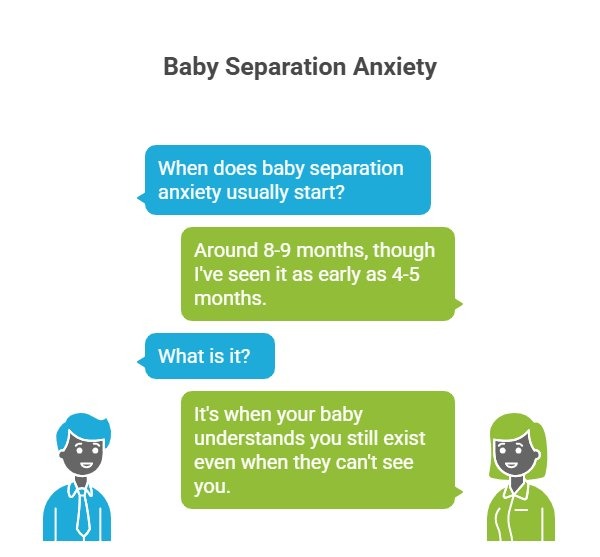
Signs of separation anxiety in babies include crying when you leave the room, becoming clingy, waking more frequently at night, and showing distress around unfamiliar people.
Separation Anxiety in Toddlers (15-24 Months)
Many toddlers who showed no separation anxiety as babies suddenly develop it between 15 and 18 months. Separation anxiety in toddlers gets stronger because they are simultaneously craving independence and feeling anxious about it. Separation anxiety symptoms in toddlers are worse when they are hungry, tired, or sick.
Separation Anxiety in Preschoolers (3+ Years)
By age 3, most children have moved past intense separation anxiety, but preschoolers who still experience it often understand exactly what they are doing. They have learned that their tears affect us. Preschoolers develop mysterious ailments right at drop-off time that vanish minutes after parents leave.
Signs and Symptoms of Separation Anxiety
Here are some common signs and symptoms that show a child may be experiencing separation anxiety.
Emotional and Behavioral Symptoms
The most common signs include excessive clinginess, intense distress at separations, refusal to sleep alone, nightmares about separation, and school refusal. Children with separation anxiety disorder exhibit school refusal behaviors.
The thing that distinguishes normal anxiety from a disorder is the intensity and duration. If your child’s fear seems too much in front of the actual situation, pay attention.
Physical Symptoms of Anxiety in Children
Young children often cannot articulate their emotional distress, so it shows physically. Common symptoms include:
- Stomachaches
- Nausea
- Headaches
- Rapid breathing
- Muscle tension
- Fatigue
If these symptoms consistently appear only during separations and vanish once reunited with parents, you are likely dealing with anxiety.
What Causes Separation Anxiety in Young Children?
Here are some common reasons why young children develop separation anxiety
Developmental Factors: Understanding Object Permanence
Object permanence is the understanding that people continue to exist even when you cannot see them. Babies are not born with this knowledge.
Between 6 and 12 months, their brains develop enough to understand you are still out there when you leave. The problem? They don’t understand you’re coming back. This developmental gap creates genuine fear.
Family and Environmental Triggers
Beyond normal development, certain factors trigger or intensify separation anxiety in children. Genetics plays a role—anxiety runs in families. Major life changes like divorce, moving, or death can trigger separation anxiety disorder. Traumatic events can trigger anxiety disorders in children.

Here’s the hard truth: well-intentioned parenting behaviors can accidentally reinforce separation anxiety. When parents consistently allow children to avoid anxiety-provoking situations like skipping school, they inadvertently teach that separation is dangerous.
Separation Anxiety vs. Stranger Anxiety
Stranger anxiety typically emerges around 8-9 months and resolves by age 2. It’s your baby’s way of showing they can distinguish familiar from unfamiliar people.
The key difference: stranger anxiety is about who is present, while separation anxiety is about who is absent. Baby stranger anxiety and separation anxiety often overlap, making the 8-12 month period particularly challenging.
When Does Normal Anxiety Become a Disorder?
Here’s how to know when normal anxiety becomes a real problem
Warning Signs
Here’s what separates typical separation anxiety from separation anxiety disorder: symptoms persisting beyond age 2-3 or lasting longer than 4-6 weeks, intensity significantly greater than peers, interference with school or normal activities, unrealistic catastrophic fears, and age-inappropriate behavior.
How Long Should Separation Anxiety Last?
Typical developmental separation anxiety emerges around 6-9 months, peaks between 10-18 months, and significantly improves by age 2-3. Brief resurgences during stressful times are normal. If symptoms are still intense and daily after age 3, something more than normal development is at play.
How to Help Your Child With Separation Anxiety
Here are some simple ways to help your child feel calm and safe during separation
Create Quick and Consistent Goodbye Rituals
This strategy has been a game-changer for every family I’ve recommended it to. Create a brief, predictable ritual repeated every time—exchange “magic kisses,” do silly dances, or special handshakes. Keep it short. The longer you stay, the more anxious everyone becomes.
Practice Short Separations and Build Trust
Start with 5-10 minute separations in low-stakes situations. Leave them with a trusted grandparent while you run to the mailbox, then gradually increase the duration.
Before starting preschool, visit the location together and practice the goodbye ritual. Every time you leave and come back, you’re building evidence: “My parent always comes back.”
Stay Calm and Positive During Drop-Offs
Young children are incredibly attuned to their parents’ emotions. If you’re anxious, your child picks up on it instantly. Be warm but matter-of-fact. Give your full attention during the goodbye ritual, smile, and leave confidently. Even if you are dying inside, project calm confidence.
Use Child-Friendly Language About Your Return
Do not say “I will be back soon”—that’s meaningless to a toddler. Anchor your return to something concrete: “I will be back right after snack time,” “I will pick you up after your nap,” or “I will see you after three sleeps” for longer separations. This transforms an abstract unknown into something tangible.
Common Mistakes Parents Make (And How to Avoid Them)
Never sneak away without saying goodbye—this destroys trust. Do not return during or after a difficult drop-off; this was my biggest mistake, and it made subsequent separations exponentially harder.
Avoid allowing avoidance—letting kids skip school teaches them that avoidance is the solution to anxiety. Limit excessive reassurance, which feeds anxiety. If you are dealing with your own separation anxiety, seek support for yourself.
Supporting Your Child’s Mental Health: When to Seek Professional Help
Consult your pediatrician if symptoms have lasted longer than 4-6 weeks without improvement, your child is missing significant school, the anxiety has triggered panic attacks, or your family life has been significantly disrupted. Trust your gut—early intervention leads to better outcomes.
Treatment Options for Separation Anxiety Disorder
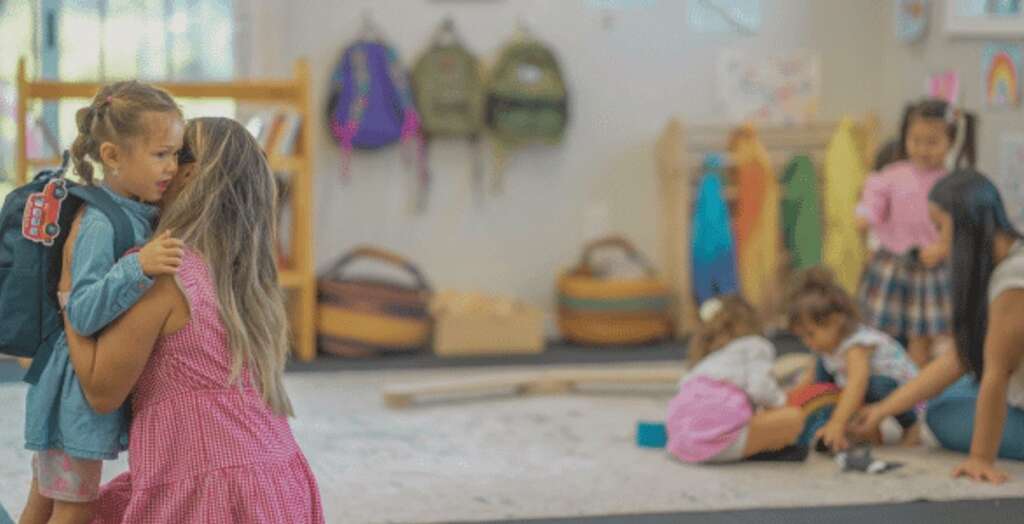
Cognitive Behavioral Therapy (CBT) is the gold standard, with about 60% of children showing improvement. Medications like SSRIs may be prescribed for moderate to severe cases.
Combination therapy yields the best results—up to 81% of children show improvement, compared to 60% with CBT alone and 55% with medication alone. Treatment may also include parent guidance, family therapy, and involvement from the school.
Can separation anxiety suddenly appear in older children who never had it before?
Absolutely. It can arise at any age in response to major life stressors like divorce, moving, or loss.
Will Can daycare make my child’s separation anxiety worse?
Surprisingly, regular separations in a supportive environment actually help most of the children in overcoming separation anxiety faster.
My child only shows separation anxiety with me, not with my partner?
This indicates you are the primary attachment figure, which is a sign of healthy bonding, not a problem.
Can separation anxiety cause long-term psychological damage if not treated?
Conclusion:
You are not failing your child by leaving them. You are teaching them that they are capable, that they can handle difficult emotions, and that the people they love always come back. Separation anxiety does not mean your bond is too strong—it means you have created such a secure attachment that your child is working through learning to feel safe without you physically present.
The strategies I have shared work because they teach your child to trust both you and themselves. If your child’s anxiety crosses into disorder territory, do not wait to seek help. Early intervention makes an enormous difference, and childhood anxiety disorders are highly treatable.
Remember: the goal is not to eliminate all anxiety. The goal is to help your child learn to manage anxiety in healthy ways and develop confidence to face the world even when they feel scared. Those lessons will serve them for the rest of their lives.
References
MedlinePlus. (2024). Separation anxiety in children. Retrieved from https://medlineplus.gov/ency/article/001542.htm MedlinePlus
Encyclopaedia Britannica. (n.d.). Separation anxiety disorder. Retrieved from https://www.britannica.com/science/separation-anxiety-disorder Encyclopedia Britannica
Journal of Child and Family Studies. (2015). Relations Between Parental and Child Separation Anxiety: The Role of Dependency-Oriented Psychological Control, 24, 3192–3199.