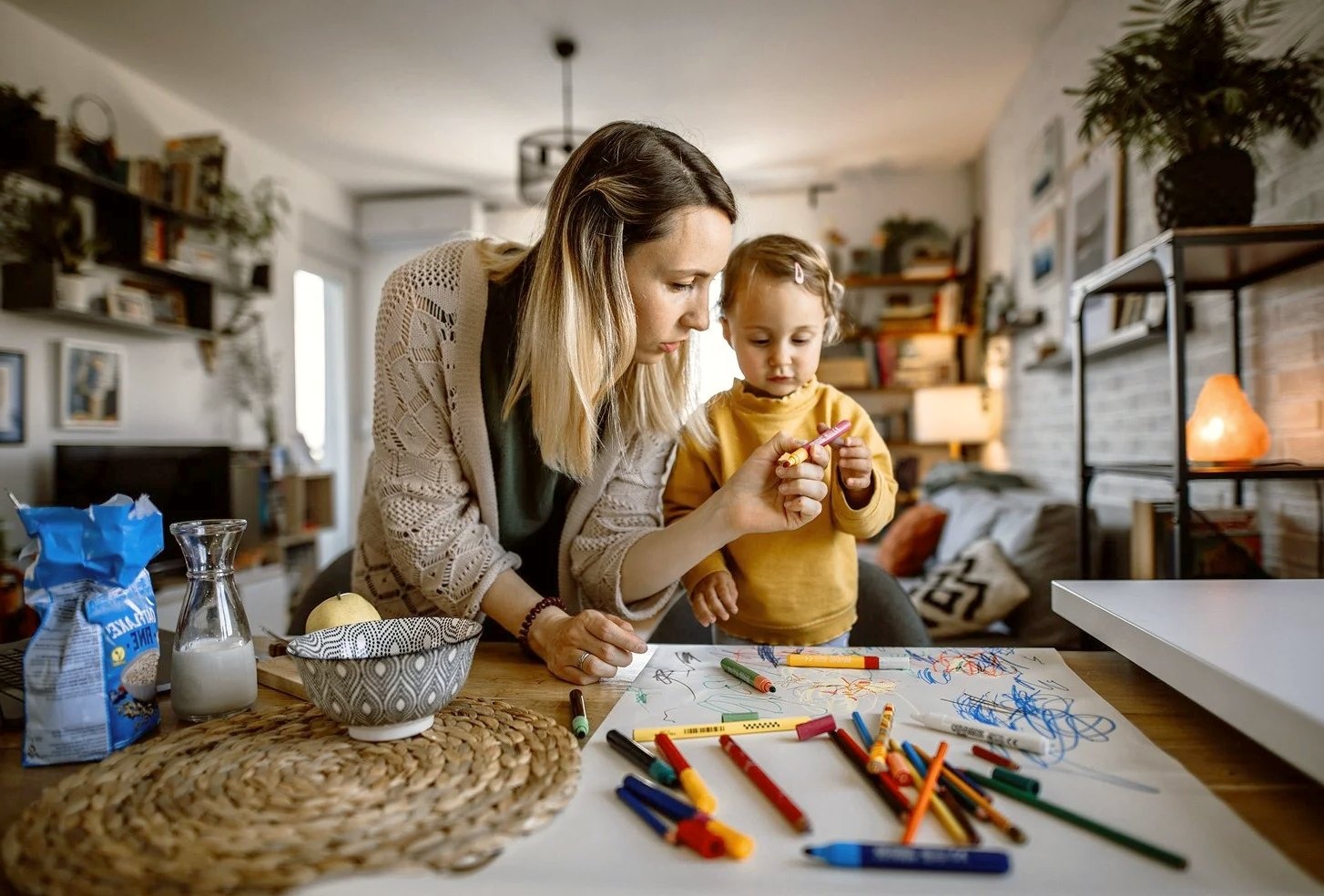
I remember the day I told my colleagues I was leaving my marketing job to become a stay at home mom. The reactions ranged from supportive nods to barely concealed confusion. One person actually asked if I was “sure about giving up everything.”
After nearly a decade of being a stay at home mom, I have learned that this path is neither the outdated stereotype some imagine nor the Pinterest-perfect fantasy others envision. It is something far more complex, challenging, and rewarding than either of these extremes suggests.
Being Stay at Home Mom Really Mean Today
Being a stay at home mom in 2025 looks nothing like the 1950s image that still dominates many people’s minds. When I first transitioned to this role, I expected long days of playtime and simple household tasks. What I discovered instead was a position that demanded every skill I had developed in my professional life, plus dozens more I never knew I needed.
According to research, approximately one in three families with children under 12 has a stay at home parent. These are not relics from another era. These are millennial and Gen Z parents who spent nearly a decade building careers before choosing to focus on family care.
What modern stay at home parenting actually involves
- Managing household budgets and financial planning
- Coordinating healthcare appointments and medical care
- Researching educational approaches and child development
- Teaching life skills through daily interactions
- Reading extensively about nutrition, psychology, and family health
- Making research-based decisions about caring for children
The Decision to Become a Stay at Home Parent
The decision to become a stay-at-home mom rarely happens in a vacuum. For my family, it came down to a spreadsheet and a conversation that lasted weeks. My husband and I calculated childcare costs, commute time, work stress, and what we valued most for our family practice.
Planning Your Family’s Future Together
Here is what I discovered about making this decision well: it cannot be one person’s choice imposed on a partnership. My husband and I spent months discussing our goals in five-year increments. We created what I call a “living plan” where we revisit our arrangement every six months.
Essential conversations before becoming a SAHM
- Who handles which household tasks and responsibilities
- How the working partner will support the at home parent
- What “time off” looks like for someone whose workplace is their home
- How to prevent resentment through ongoing dialogue
- Financial expectations and budget adjustments
- Long-term career and family goals
The tracks time use data that reveals stay at home parents work an average of 94 hours per week on childcare and household management. That is more than two full-time jobs. Understanding this workload upfront helped my husband and me create realistic expectations.
Stay at Home Dad: Breaking Traditional Gender Roles
While I am a stay at home mother, I have met dozens of fathers who have chosen this path as well. One of my closest friends is a stay at home dad who left his engineering career when his wife received a promotion that doubled their family income. He faces questions and assumptions I rarely encounter.

The data shows that father stay at home arrangements are growing. More families are making decisions based on economic practicality and personal preference rather than rigid gender expectations. In my community, I see home stay dad figures at library story times, school pickups, and parent meetups.
Benefits of Being a Stay at Home Mom
Let me be direct: I do not wake up every morning feeling grateful and fulfilled. Some days are tedious. Some weeks are exhausting. But over the long arc of nearly ten years, the benefits of stay at home parenting have proven profound.
Building Strong Family Bonds as Primary Caregivers
The most significant advantage I have experienced is the depth of relationship I have built with my children. I know their patterns, their struggles, their small victories. When my son started having trouble with a classmate, I noticed the shift in his mood immediately because I see him every day in relaxed, unguarded moments.
Research from the National Institute of Child Health and Human Development indicates that consistent, responsive caregiving from primary caregivers supports healthy emotional development. I have watched this play out in my own home. My children know without question that someone is always available when they need support.
Witnessing Every Milestone in Your Child’s Life
I was there when my daughter took her first steps. I heard my son’s first word. I watched my youngest figure out how to tie her shoes after days of determined practice.
Milestones only home mothers typically witness
- The day your child first uses humor to deflect embarrassment
- The moment they begin advocating for themselves with peers
- When they demonstrate genuine empathy for the first time
- Subtle shifts in personality and character development
- Incremental growth that builds into lasting traits
Teaching Your Family Values at Home
One of my primary motivations for being a stay at home mom was the ability to be the main influence on my children’s value system during their formative years. I wanted to teach them about kindness, integrity, resilience, and curiosity in ways that aligned with our family practice. Values are not taught through lectures but absorbed through hundreds of small interactions.
Creating a Welcoming Home Environment
My children come home from activities and playdates to a parent who is present and available. I have watched their faces light up when they see me waiting at pickup. I have heard them processing their day as we walk to the car, unburdening themselves of small worries before we even reach home.
The Real Sacrifices of Stay at Home Parenting
I believe in honest accounting. The benefits of being a stay at home mom come with real costs. Anyone considering this path deserves to understand what they might be giving up.
Financial Trade-offs and Budget Adjustments
The most obvious sacrifice is income. When I left my job, our household income dropped by 40 percent overnight. We had to make immediate changes to our lifestyle.
According to Child Care Aware of America, full-time childcare costs an average of $11,582 per child annually. For many families, one parent’s entire salary goes to childcare costs. But even when the math makes sense on paper, living on less income requires adjustment.
Budget cuts we made as a mother home
- Downgraded internet speed to basic tier
- Stopped eating at restaurants except special occasions
- Started shopping at thrift stores for clothing
- Cancelled unnecessary subscriptions
- Made every luxury a conscious choice
- Reduced savings cushion for emergencies
Career Advancement and Professional Identity
Before I became a SAHM, my career defined a significant part of my identity. I had business cards, professional accomplishments, and industry recognition. That all evaporated the day I left my job.

Data from Harvard Business Review shows that career breaks averaging five years can result in wage penalties of up to 20 percent upon return to work. That is not speculation. That is the economic reality of time away from paid employment.
The Isolation Challenge for Home Mothers
Here is what nobody warned me about: the loneliness. I spent my twenties in offices full of adult conversation, professional challenges, and social interaction. Suddenly, I was home with a toddler, reading the same board book twelve times before lunch.
The U.S. Surgeon General’s 2024 advisory on parental stress specifically identifies isolation as a significant contributor to burnout among caregivers. I have felt this acutely. Most days, my only adult conversations happen with my husband after the children are in bed.
Thriving as a SAHM: Personal Growth and Development
Despite the challenges, staying home has forced me to grow in ways my career never demanded. The isolation taught me self-reliance. The financial constraints taught me creativity. The constant presence of children taught me patience I never knew I needed.
Developing Patience and Parenting Skills
I am not naturally patient. Before children, I was the person tapping my foot in slow checkout lines and interrupting people who took too long to make their point. Caring for children demolished my impatience and rebuilt something stronger in its place.
Skills developed through stay at home parenting
- Reading subtle cues before children melt down
- Tailoring discipline approaches to each personality
- Navigating sibling conflicts constructively
- Managing medical emergencies calmly
- Making informed decisions through research
- Advocating for children in educational settings
Building Confidence in Your Role as Mother Home Manager
I have grown more confident as I have spent years managing our family home. I now know I can handle medical emergencies, budget crises, home repairs, scheduling nightmares, and the inevitable chaos of family life. This confidence extends beyond domestic tasks to complex decision-making and community building.
Work from Home for Mothers: Balancing Income and Care
After five years as a full-time stay at home mother, I began exploring options to contribute financially while maintaining my role as primary caregiver. This led me to discover the world of work from home for mothers. The flexibility allows me to remain the primary caregiver while also engaging my professional skills.
Home-Based Business Opportunities for Stay at Home Working Moms
The rise of remote work and online platforms has created unprecedented opportunities for stay at home working moms. I know home mothers who run successful businesses as virtual assistants, freelance writers, graphic designers, bookkeepers, and consultants. I started my own small consulting practice during my children’s school hours.
Successful home-based ventures for mother home businesses
- Virtual assistance and administrative support
- Freelance writing and content creation
- Graphic design and creative services
- Bookkeeping and financial consulting
- Online course creation and teaching
- Podcast production and digital media
- Handmade goods and e-commerce stores
Maintaining Professional Credentials During Your Career Pause
One of the smartest decisions I made was maintaining my professional licenses and certifications even when I was not actively working. This required annual fees and continuing education, but it kept my credentials current. I also stayed connected to my professional network through occasional industry events and updated LinkedIn profiles.
The Role of Mom: More Than Just In Home Care
One persistent frustration I have is how society reduces stay at home parenting to “just” childcare and housework. The role of mom in a family encompasses far more than these visible tasks. It includes teaching, mentoring, healthcare coordination, financial management, and emotional support.
Life Skills Children Learn from Stay at Home Parents
My children have learned to cook, manage money, do laundry, clean effectively, plan meals, grocery shop, and handle basic home repairs by watching me do these things daily. These are not lessons I could teach on weekends alone. They have also absorbed subtler skills like handling difficult phone calls, researching before purchases, and prioritizing tasks effectively.

According to research from the, children who observe adults managing household tasks
develop stronger executive function skills. They learn planning, organization, and follow-through by seeing these processes in action. My teenagers now manage their own schedules and handle age-appropriate household responsibilities without reminders.
Adult Family Home Management and Caring for Children
Being a stay at home parent often extends beyond caring for children. I have provided in home care for aging parents during health crises. I have coordinated medical appointments for multiple family members. I have managed the complex logistics of multigenerational family care.
Many stay-at-home mothers find themselves becoming family caregivers for elderly relatives in addition to their children. The skill set overlaps significantly. Both require patience, organization, medical knowledge, and the ability to coordinate multiple providers and appointments.
Finding Balance in Stay at Home Motherhood
The concept of balance as a SAHM took me years to understand. Balance does not mean equal time for all things. It means intentionally prioritizing what matters most while accepting that some areas will always get less attention than you wish.
Creating Support Systems and Family Care Networks
I learned early that I could not sustain stay at home parenting in isolation. I needed support systems. I built relationships with other home mothers in my area where we trade childcare, share resources, and provide emotional support when parenting feels overwhelming.
Essential support elements for family health
- Regular childcare trades with trusted parents
- Weekly scheduled breaks for each partner
- Extended family involvement and backup care
- Professional mental health support when needed
- Community connections through parent groups
- Online networks for advice and encouragement
Self-Care Strategies for Family Caregivers
I resist the term “self-care” because it often gets trivialized into bubble baths and face masks. Real self-care for family caregivers is about maintaining physical and mental health so you can continue functioning in a demanding role. For me, this means protecting my sleep, exercising regularly, maintaining friendships, pursuing interests beyond parenting, and asking for help when I need it.
The National Institute of Mental Health has extensive resources on caregiver burnout and mental health support. I schedule my annual physical, go to therapy, and treat my health as seriously as I treat my children’s health. You cannot pour from an empty cup.
Do stay at home parents work harder than those with traditional jobs?
Stay at home parents work an average of 94 hours weekly on childcare and household management, which exceeds typical full-time employment by more than double.
How do stay at home moms maintain their professional identity?
Successful approaches include maintaining professional licenses, staying connected to networks, taking freelance projects, and pursuing continued education in their field.
What is the biggest challenge of being a stay at home mom?
Many home mothers identify isolation and loss of adult interaction as the most difficult aspect, even more challenging than the physical demands of childcare.
Can you go back to work after being a stay at home parent?
Yes, though career breaks can result in wage penalties averaging 20 percent, many stay at home parents successfully return to work by maintaining skills and demonstrating continued professional development.
Conclusion
Stay at home parenting remains one of the most misunderstood and undervalued roles in modern society. After nearly a decade in this position, I can say with certainty that it is complex, demanding work that requires every professional skill I ever developed plus dozens more I learned on the job.
The sacrifices are real, including lost income, career advancement, and professional identity, but the rewards of being present for my children’s development have proven irreplaceable. Whether you are a stay at home mom, a stay at home dad, or considering this path.
The choice deserves the same respect and strategic planning as any major career decision. The work of family caregivers matters profoundly, and it is time our society recognized stay at home parenting as the substantial, skilled work it truly is.