
Becoming a parent changes everything overnight. I remember the first time I held a newborn—my friend’s daughter—and felt that mix of pure joy and absolute terror. One moment you are confident, the next you are Googling “is this normal?” at 3 AM. Here’s the new parents’ advice I wish someone had given me from day one, drawn from years of working with families and learning what actually works.
Understanding Your Newborn Baby
Getting to Know Baby Born
Babies communicate through crying, facial expressions, and body language. Paying attention to these cues makes everything easier. Newborns typically sleep about 16 hours daily but in short bursts. They can not see far at first, just about 8 to 12 inches, which is the perfect distance to see your face during feeding.
Their vision develops rapidly over the first months. Track developmental milestones like smiling, moving, and responding to sounds using resources from the CDC CDCCDC to ensure your baby is progressing as expected.
Baby’s Development and Behavior
Babies develop on their own timeline. Some roll over early; others take their time. The key is watching for consistent progress rather than hitting exact dates. Crying patterns change weekly. Trust your instincts. If something feels off, it deserves attention.
Essential Baby Care Tips for First-Time Parents
Handling Baby Safely
The first rule of handling a baby safely is simpler than you think: wash your hands every single time. Newborns have delicate immune systems, and this one habit prevents most infections. I learned this the hard way when my nephew caught a cold from a well-meaning visitor who “just wanted a quick cuddle.”
Always support the baby’s head. Their neck muscles are not strong enough yet, so cradle that head whether you are lifting, carrying, or laying them down. Never, ever shake a baby, even during play. Shaking can cause brain bleeding and death.
Baby’s Head and Neck Support
The baby’s head needs constant support for the first several months. When you pick up your newborn, slide one hand under their head and neck and the other under their bottom. Keep their head elevated above their body when holding them upright.

I remember feeling terrified about dropping a baby during those first holds. Here’s the reassurance nobody gave me: babies are more resilient than they look, but proper head support isn’t negotiable. Make it automatic. Every single time you reach for your little one, think “head first.”
Washing Newborns and Bathing Basics
Bathing newborn recommendations. You do not need to bathe your newborn daily. In fact, bathing once to three times a week is sufficient for the entire first year, according to the American Academy of Pediatrics and The Bump. Newborns do not get particularly dirty, and too much bathing can dry their delicate skin.
For washing a newborn in those early days, stick with gentle wipes for the face, neck, hands, and diaper area. This approach, called “topping and tailing,” works perfectly until you are ready for full baths.
Sponge Bath Newborn Techniques
- A sponge bath newborn routine should start immediately after birth and continue until the umbilical cord stump falls off (usually 10 days to 3 weeks). Here’s my straightforward approach that works every time.
- Gather everything first: a bowl of lukewarm water, a soft washcloth, mild fragrance-free baby soap, a clean towel, a fresh diaper, and clean clothes. Test water temperature on your inner wrist. It should feel comfortably warm, never hot.
- Lay your baby on a comfortable surface, keeping one hand on them always. Wrap them in a towel and only expose the part you are actively washing. Start with the face and scalp using just water, no soap. Then add a tiny amount of soap to the water and gently clean the rest of their body, paying special attention to neck creases, behind the ears, and all those adorable little rolls.
- Once your baby is ready for the best bath for newborns after the umbilical cord falls off, safety becomes paramount.

- The Consumer Product Safety Commission and American Academy of Pediatrics recommend bathwater no hotter than 120 degrees Fahrenheit to prevent burns. Stack ExchangeAmerican Academy of Pediatrics. Set your water heater to this maximum temperature if you can.
- Use only 2 to 3 inches of water in the tub. Babies can drown in incredibly shallow water, so this is not negotiable. Test the temperature with your elbow, not your hand. Your elbow is more sensitive and gives you a better sense of what your baby will feel.
- Never, and I mean never, leave your baby alone in the bath. Not for a second. Not to grab a towel you forgot. Not to answer the phone. If you must leave, wrap them up and take them with you.
Diapering and Hygiene
Expect about 10 diaper changes daily for a newborn. I have learned that being prepared saves you from those explosive situations everyone warned you about, but you did not quite believe until it happened.
Change diapers frequently. Leaving a baby in a wet or soiled diaper leads to painful rashes. Always wipe front to back, especially for girls, to prevent infections. Use warm water and cotton balls for the gentlest clean, or unscented baby wipes.
Keep everything within arm’s reach during changes. One hand should always be on your baby. Those changing table falls you hear about? They are real, and they happen fast.
Feeding and Breastfeeding Your Baby
Breastfeeding Basics
Breastfeeding frequency: newborn CDC recommendations. In my experience working with new parents, breastfeeding feels overwhelming at first, but it gets easier. Newborns typically breastfeed 8 to 12 times in 24 hours, according to the CDC.
Yes, that’s essentially every 1 to 3 hours, including overnight. Feed on demand. Do not wait until your baby is crying desperately. A calm, alert baby latches better than a screaming one.
Feeding Schedule and Patterns
There’s no rigid schedule in those early weeks, and that’s okay. Your baby’s tiny stomach can only hold small amounts, so frequent feeding is necessary. Trying to enforce a schedule with a newborn just creates stress for everyone.
Signs your baby is getting enough: they are content after feeding, producing about six wet diapers and several poops daily, and gaining weight steadily. You should also notice your breasts feeling fuller before feeding and softer afterward.

Do not be alarmed if breastfeeding hurts initially. Some discomfort is normal as you both learn, but severe pain or cracked, bleeding nipples signal a latch problem. Get help from a lactation consultant immediately. This isn’t something to tough out alone.
Soothing a Baby: Calming Techniques That Work
Swaddling Your Newborn
Swaddling works like magic for most newborns during their first few weeks. It recreates the snug feeling of the womb and helps prevent the startle reflex that wakes them up.
Foolproof method
- Spread a blanket diamond-style with one corner folded down. Lay your baby face-up with their head above the fold. Wrap the left corner across their body and tuck it under their back beneath the right arm. Bring the bottom corner up over their feet toward their head, folding it down if it gets near their face. Finally, wrap the right corner around and tuck it under their left side.
- Do not wrap too tightly around the hips. The hips and knees need to bend and turn out slightly. Wrapping too tightly increases the risk of hip dysplasia. You should be able to slip your hand between the blanket and your baby’s chest.
- Stop swaddling when your baby shows signs of rolling over, usually around 2 months. Swaddled babies who can roll face a serious SIDS risk.
White Noise and Movement
Babies find repetitive sounds incredibly soothing. Parents try expensive white noise machines when a simple fan works just as well. The key is consistency and appropriate volume. Keep it at a conversational level, not louder.
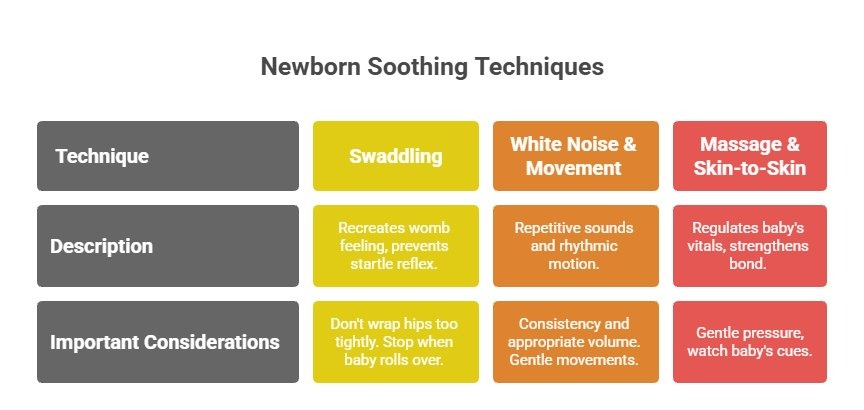
Gentle, rhythmic movement helps too. Swaying, rocking, or even just walking around with your baby can work wonders. I remember one particularly fussy evening when the only thing that worked was pacing the hallway for what felt like hours. Sometimes that’s just how it goes.
Massage and Skin-to-Skin Contact
Skin-to-skin contact, also called kangaroo care, is one of the best pieces of new-parent advice I can offer. Strip your baby down to just a diaper and hold them against your bare chest. This regulates their heartbeat, temperature, and breathing while strengthening your bond.
For infant massage, use gentle pressure with slow, rhythmic strokes. Start with the legs and work your way up. Watch your baby’s cues. If they seem uncomfortable or fussy, stop. This should be relaxing for both of you.
Baby Checklist: What New Parents Really Need
Before you spend a fortune on every gadget marketed to new parents, here’s what you actually need: basic clothing (onesies, sleepers, socks), diapers and wipes, a safe place to sleep (bassinet or crib), a car seat, feeding supplies, and a few soft blankets.
Skip the expensive items you will use once. Many first-time parents buy nursery furniture sets, fancy diaper pails, and specialized gadgets that end up collecting dust. Buy as you go, and let friends lend you things to try first.
The baby advice nobody gives you: babies outgrow everything incredibly fast. Do not stock up on newborn sizes.
Positive Parenting: Building Strong Bonds
Talk to Your Baby
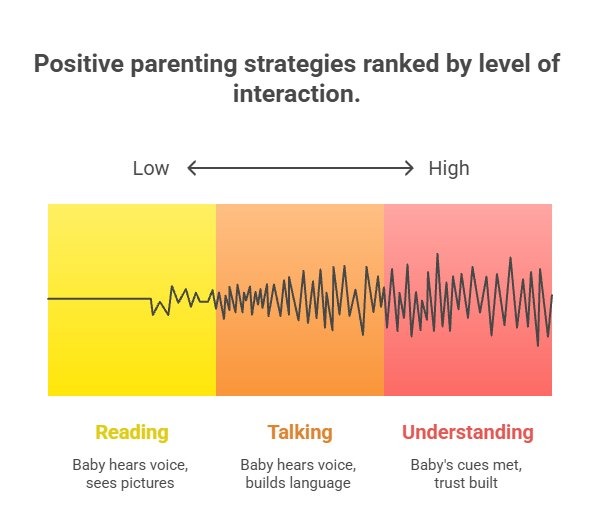
Your voice is fascinating to your newborn. Talk to your baby constantly, even though they cannot respond yet. You can start by simply saying, “Let’s clean you up.” This builds language skills and strengthens your connection.
Babies respond beautifully to different tones and patterns. Try talking in that high-pitched, sing-song voice that comes naturally. It’s not silly. It’s actually how babies learn language best.
Read to Your Baby
Start reading to your baby from day one. They would not understand the words, but they will love hearing your voice and seeing the pictures. Make it a routine or part of a bedtime routine. I recommend board books with high-contrast images for the youngest babies.
Read with expression and enthusiasm. Point to pictures. Let them touch the pages (expect them to try eating the book eventually). These early reading experiences create lifelong readers.
Practice Understanding Your Baby
Learning your baby’s unique cues takes time and patience. One baby’s tired cry sounds completely different from their hungry cry. Pay attention to body language too. Clenched fists often signal stress. Turning away might mean overstimulation.
When you meet their needs promptly, they learn to trust you. This is not “spoiling” them. It’s building secure attachment, which is fundamental for healthy development.
Rules for Parents: Healthy Habits and Routines
Sleep Safety Guidelines
Sleep safety is non-negotiable advice for new parents. The American Academy of Pediatrics recommends placing babies on their backs for every sleep, using a firm flat surface, and keeping the sleep area in your room for at least six months American Academy of Pediatrics CDC. Always back to sleep, every single time.
Keep the crib completely bare. No pillows, blankets, stuffed animals, or bumper pads. These items significantly increase suffocation risk. If you are worried about your baby being cold, use a sleep sack or wearable blanket instead of loose blankets.
Room-sharing without bed-sharing reduces SIDS risk by up to 50 percent. Keep your baby’s crib or bassinet right next to your bed, but never bring them into your bed to sleep. The risk of suffocation in adult beds is simply too high.
Establishing Routines
Routines help babies understand what’s coming next, which makes them feel secure. Start simple with a bath, feeding, and bedtime sequence. Consistency matters more than the specific activities you choose.
I have observed that routines evolve as babies grow. What works at two months would not work at six months. Stay flexible and adjust as needed, but maintain some predictable elements throughout.
Do not stress about perfect schedules in the early weeks. Focus on meeting needs first, patterns second. The routine will emerge naturally as you get to know your baby.
Best Advice for New Parents: Emotional Well-being
Managing Stress and Expectations
Here’s the best advice for new parents that nobody talks about enough: lower your expectations dramatically. That Instagram-worthy nursery? Your baby does not care. The perfect feeding schedule? It does not exist. The clean house? Forget it.
Many parents burn out trying to maintain their pre-baby standards. Your only job right now is keeping your baby fed, clean, and loved. Everything else is optional.
Those first weeks are survival mode. You are learning an entirely new skill set while functioning on minimal sleep. Be gentle with yourself. Mistakes happen. You will forget things. This is all completely normal.
Accepting Help and Building Support
The parenting guide everyone needs starts here: accept every offer of help. Someone wants to bring dinner? Yes. Your mom offers to hold the baby while you shower? Absolutely. A friend suggests doing laundry. Please do.
This stubborn idea that you should handle everything alone is nonsense. Humans evolved to raise children in communities, not in isolation. You are not weak for needing help. You are smart for accepting it.
Join a new parents’ group if possible. Connecting with others experiencing the same chaos makes everything more bearable. You will swap stories, share tips, and realize you are not the only one struggling with 3 AM crying sessions.
Self-Care for New Parents
Self-care is not selfish. It’s essential. You cannot pour from an empty cup, and exhausted, depleted parents cannot care for babies effectively. This is practical, not indulgent.
Sleep when the baby sleeps. I know everyone says this, and it sounds impossible, but those dishes can wait. Your body needs rest to heal and function. Make sleep a priority whenever possible.
Eat real food. Keep simple, nutritious snacks accessible. Granola bars, fruit, nuts, and cheese sticks. You need fuel to produce milk, heal from birth, and maintain energy. Do not skip meals because you are too busy.
Parenting Guide: Practical Wisdom for the Journey
The ultimate parenting guide comes down to this: trust yourself more than any book, article, or well-meaning relative. You know your baby better than anyone else ever will. That instinct telling you something’s wrong? Listen to it.
First-time parents often second-guess themselves constantly. They read contradictory advice and feel paralyzed. Here’s what I have discovered: there are many right ways to parent. If your baby is thriving and you are managing, you are doing it right.

Watch your baby, not the clock. Feed them when they are hungry, not when the schedule says. Let them sleep as long as they need. Follow their lead, and you will both be happier.
The new parents’ advice I wish I had heard earlier: this phase is temporary. The sleepless nights, the constant feeding, the overwhelming adjustment period—it all passes faster than you can imagine. One day, you will look back and barely remember these exhausting early weeks.
How often should I bathe my newborn?
Two to three times per week is plenty for newborns. Their skin is delicate, and frequent bathing can cause dryness.
When will my baby sleep through the night?
Most babies sleep 6-8 hour stretches by 3 months, but every baby differs. If yours does not, that’s completely normal and not your fault.
Is it normal for breastfeeding to hurt?
Some initial discomfort while learning is normal, but severe pain signals a latch problem. Get help from a lactation consultant right away.
How do I know if my baby is getting enough to eat?
Watch for 6+ wet diapers daily, steady weight gain, contentment after feeding, and regular pooping. These signs indicate adequate nutrition.
Conclusion
Becoming a parent transforms your entire world overnight. The new parents’ advice I have shared comes from real experience—both my own and that of countless families I have worked with over the years. You will make mistakes, feel overwhelmed, and question yourself constantly. That’s not failure. That’s normal.
Remember that handling a baby safely, establishing feeding routines, practicing positive parenting through talking and reading to your baby, and following safe sleep guidelines form the foundation of good infant care. Everything else you will figure out as you go.
The best advice for new parents-to-be is simple: be patient with yourself and your baby. You are both learning together. Trust your instincts, accept help when offered, and focus on the basics. Your baby needs love, food, cleanliness, and safety.
Provide those consistently, and you are succeeding. These early weeks are intense but temporary. Before you know it, you will be the one offering baby advice to nervous new parents, remembering these chaotic days with surprising fondness.