
When I first became a parent, I thought I knew exactly what I was doing. I read all the books, talked to experienced parents, and felt confident. But reality hit me hard when my toddler threw his first public tantrum at the grocery store.
That’s when I realized the best parenting style is not about having all the answers. It’s about understanding your approach and being willing to adjust. Parenting styles are essentially the patterns we adopt when raising our children. They affect everything from how we discipline to how we show love.
The 4 Main Types of Parenting Styles
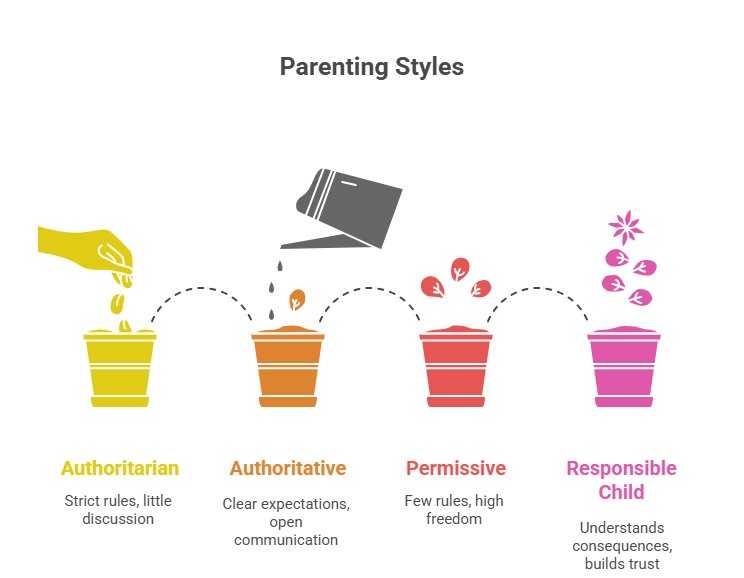
In the 1960s, a psychologist named Diana Baumrind figured out that there are three main parenting styles. Later, researchers added a fourth one. Knowing these helps you see your own patterns more clearly.
Authoritarian Parenting
My dad was an authoritarian parent, so I know this one inside and out. It’s all about strict rules, sky-high expectations, and not having much warmth. These parents prefer that kids should only obey and that no questions should be asked. Punishment is their go-to tool.
Picture this: your kid asks why they cannot eat cookies before dinner. An authoritarian parent just says, “Because I said so” or “My house, my rules.” End of conversation. No explanation, no wiggle room, and definitely no input from the kid.
Effects on Children and When It Might Help
I have observed how authoritarian parenting plays out. Kids usually behave well around their parents, but they really struggle when making their own decisions. The American Psychological Association found that these kids often end up with low confidence, social awkwardness, and trouble thinking.

But here’s something surprising I learned: some authoritarian elements can actually help kids with autism or ADHD. These children often do better with crystal-clear structure and straightforward communication. The trick is mixing that firmness with genuine warmth.
Authoritative Parenting: The Gold Standard of Child-Rearing
After years of handling cases from different families and studying psychology, I am convinced that authoritative parenting is one of the suitable parenting styles. It’s not perfect for every single situation, but it consistently produces the best results.
What Makes Authoritative Parents Different?
Authoritative parents still have rules and boundaries. But they explain why those rules exist. These parents actually listen when their kids talk or try to share something, encourage real conversations, and use natural consequences instead of harsh punishments.

These parents are “firm but fair.” They are definitely in charge of the home, but they also respect their kids’ feelings. For example, when a rule gets broken, they do not just punish and move on. They help the child to understand what went wrong and what to do next time.
Why Experts Recommend This Approach
The research on this is really clear. Studies from the National Institute of Child Health and Human Development show that kids raised with authoritative parenting are better at controlling themselves, do better in school, have stronger friendships, and bounce back from setbacks easily.
Authoritative parenting completely changes families that were struggling. These types of kids grow up into adults who think clearly, handle their emotions well, and make good choices. They have learned that mistakes teach us things in a clearer way.
Permissive Parenting: Love Without Limits
Permissive parenting is on the opposite end of authoritarian parenting. These parents give tons of love and communication, but have almost no boundaries. They want to be their kids’ best friend of their parents.

I know several parents who chose this route because they had super strict childhoods. They promised themselves they would never be like their own parents. But I have learned that kids actually need boundaries to feel secure.
The Consequences of Too Much Freedom
Kids with permissive parenting usually struggle with self-control and obeying rules and regulations. They might feel good about themselves, but they are often impulsive and demanding and can not handle being told no. These kids hit adulthood without being ready for real responsibilities.
Uninvolved Parenting: The Neglectful Approach
Uninvolved parenting is considered the worst of the four types. These parents handle the basic needs of their children, like food and shelter, but they are emotionally checked out.

Mostly, the kids under uninvolved parenting end up struggling with their emotions, building relationships, and feeling worthy most often the time. They are more likely to have behaviour issues and perform poorly in school.
Authoritative vs Authoritarian Parenting
I get why people confuse these two. The words sound almost identical. But they’re completely different approaches, and knowing the difference matters a lot.
The biggest difference is warmth and communication. Authoritarian parents just demand obedience without explaining anything. Authoritative parents explain their thinking and actually want to hear what their kid thinks.
How Each Style Handles Real-Life Situations
Let me show you what I mean. Say your teenager comes home two hours past curfew:
Authoritarian parent: “You are grounded for a month. I do not want to hear it.”
Authoritative parent: “You broke curfew, which means you broke our trust. You will need to prove you can be responsible before we give you this much freedom again.”
Permissive parent: “Oh well, hope you had fun! Just try to make it home on time next time, okay?”
The authoritative approach teaches responsibility without damaging your relationship with your kid.
What Is the Best Parenting Style According to Research?
After considering decades of research and working with a variety of families, I can say with confidence that authoritative parenting is the best parenting style for raising healthy, successful kids. This is not just my opinion. The U.S. Department of Health and Human Services backs this up with solid research.
Children who are raised with authoritative parenting consistently perform better than many other kids. For example, Better grades, better emotional control, healthier relationships, and happier lives overall.
Essential Parenting Strategies for Success
No matter how you’ve parented before, you can start using these strategies right now.
Build Self-Esteem and Catch Kids Being Good
Your kid’s confidence comes mainly from how you see them. Every word, every facial expression, and every reaction shapes how they see themselves. I trained myself to look for the good things my kids do. Instead of only noticing the bad stuff, I catch them being good. “You helped your sister tie her shoes without me asking.

That was really kind,” or “I saw you keep trying with that puzzle even though it was frustrating. That’s real determination.” This does not mean praising everything. It means genuinely noticing effort, improvement, and good character. Never compare your kids to each other or say belittling things. Words like “That was so stupid” or “Why can’t you be more like your brother?” hurt just as much as hitting.
Set Clear Boundaries and Make Time for Your Kids
Every kid needs structure to feel safe and learn self-control. A simple routine of sitting down as a family and deciding on house rules together. Maybe homework comes before TV time, or everyone speaks respectfully. Here, the most important thing is staying consistent. You cannot punish backtalk today and ignore it tomorrow. Kids need to know what to expect.
But here’s the thing: rules without relationship just create rebellion. Make time for your kids even when life gets crazy. Wake up 10 minutes earlier to have breakfast together. Put a funny note in their lunchbox. Show up to their games. These little moments tell them they matter.
Be a Role Model and Communicate Effectively
Your kids watch everything you do. They learn more from watching you than from listening to your lectures. Want respectful kids? Show respect. Want honest kids? Be honest with yourself.
Communication is everything in good parenting. Kids deserve explanations just like adults. When you make a rule, tell them why it exists. When something goes wrong, talk about it openly.
Adapting Your Parenting Style to Your Child’s Unique Needs
Here’s what I wish someone had told me earlier: what works for one kid might not work for another. The best parenting style provides a framework, based on each child’s personality and needs.
Some kids need way more structure. Kids with ADHD usually do better with clear routines. Children with autism might need more visual reminders and predictable patterns. Gifted kids might need different boundaries that match their advanced thinking.
Your parenting has to grow as your kids grow. What works with a three-year-old would not work with a thirteen-year-old.
Frequently Asked Questions
Can I switch from authoritarian to authoritative parenting if my kids are already older?
Yes, definitely. It’s never too late, though you will need patience while everyone adjusts.
Is it possible to be too authoritative?
Not really. Real authoritative parenting already balances warmth with structure perfectly.
What if my partner and I have different parenting styles?
Always back each other up in front of the kids, then talk privately about your differences.
How do I know which parenting style I’m currently using?
Be honest about how you communicate, set rules, and handle misbehavior. Do you explain your reasons? Do you listen?
Conclusion
Parenting is the hardest thing you will ever do, but also the most rewarding. There’s no such thing as a perfect parent. Understanding the four types of parenting styles helps make better choices. The research is crystal clear: the best parenting style is authoritative parenting. It mixes high expectations with high warmth, so kids feel both supported and challenged.
Start making small changes today. Explain why, when you set a rule. Really listen to your kid’s side. Notice the good stuff they do. Show them the behavior you want to see. Make time to connect. Your kids do not need you to be perfect. They need you to be present, loving, and consistent. Give them roots to feel secure and wings to explore. That’s what good parenting looks like.
References
- Centers for Disease Control and Prevention. (2024). “Essentials for Parenting Toddlers and Preschoolers.” https://www.cdc.gov/parents/essentials/index.html
- American Psychological Association. (2024). “Parenting.” https://www.apa.org/topics/parenting
- National Institute of Child Health and Human Development. (2024). “Parenting and Child Development.” https://www.nichd.nih.gov/health/topics/parenting
- U.S. Department of Health and Human Services. (2024). “Healthy Marriage and Relationship Education.” https://www.acf.hhs.gov/opre/topic/healthy-marriage-relationship-education
- Baumrind, D. (1967). “Child care practices anteceding three patterns of preschool behavior.” Genetic Psychology Monographs, 75(1), 43-88.