
I have found that most parents focus entirely on academic grades and test scores, but here’s what I discovered over the years.
What is Emotional Intelligence?
Emotional intelligence in children matters just as much as their IQ. In fact, it might matter more. Back in 1995, psychologist Daniel Goleman made this case in his groundbreaking book, and research has only strengthened his argument since.
“Emotional intelligence is the ability to understand and manage your own emotions and those of others.”
— Goleman, D. (1995). Emotional Intelligence.
Emotional intelligence and IQ are not competitors. They work together. Your child might score brilliantly on math tests, but without emotional intelligence, they will struggle to handle failure, work in teams, or bounce back from disappointment. It has seen bright kids go off the track because they could not manage their emotions.
The Five Core Components
Emotional intelligence breaks down into five straightforward pieces. First, there’s self-awareness, which means understanding what you are feeling right now. Then comes self-management, the ability to handle those emotions without losing control.
Social awareness lets your child read the emotions of people around them. Relationship management helps them navigate connections with others. Finally, motivation drives them forward even when things get tough.
Why Assessment Matters
Measuring emotional intelligence helps you see where your child actually stands. An emotional intelligence test is not like an IQ test. It shows how well your child recognizes emotions, handles stress, and connects with others. Knowing this gives you a clear starting point for development.
Academic and Social Benefits
Here’s something I wish I had known earlier: research from CASEL shows that children in social and emotional learning programs see an 11 percentile point jump in academic performance. That’s real.
They also have better attendance, less anxiety, and stronger friendships. Building emotional intelligence in children is not a distraction from learning. It’s fuel for it.
The Cost of Low Emotional Intelligence
In my experience, kids with low emotional intelligence struggle harder than their peers. They react instead of respond. They throw pencils when frustrated instead of asking for help. They assume teachers are complaining rather than caring. Without developing emotional intelligence, these patterns get locked in, and as adults, they face serious challenges with relationships and career success.
Early Development Years
The window for shaping emotional intelligence opens early and stays open longer than many people realize. Children who get early emotional awareness training have an easier time throughout school and beyond. But even older kids can improve. It just takes consistency and the right approach.
Core EI Skills
The following key skills help individuals understand, manage, and use emotions effectively in daily life.
Self-Awareness and Self-Management
Start by helping your child notice what they are feeling. I have discovered that kids who can name their emotions—saying “I’m frustrated” instead of just yelling—have taken a huge step forward. Once they name it, they can manage it. Self-management skills training teaches kids to pause before reacting, to take deep breaths, and to think about what comes next.
Social Awareness and Social Skills
Teaching children to read other people changes everything. When your kid sees their friend is sad, can they recognize it? Do they respond with kindness? Social emotional intelligence includes these social skills. It has been observed that children develop genuine empathy when adults slow down and ask questions like, “How do you think that made them feel?”

Building Stronger Relationships
Here’s something powerful: emotional intelligence in relationships makes bonds last. Kids who understand their own emotions and respect others’ emotions develop deeper, more trustworthy friendships. They also navigate conflicts better and know how to apologize and forgive.
How to Build Emotional Intelligence
You can build emotional intelligence by understanding and managing feelings in everyday life.
Communication Strategies
In my experience, the best communication starts with listening. Ask your child what they are struggling with instead of telling them what’s wrong. Use simple language they understand. Instead of saying “manage your anxiety,” try “let’s take bubble breaths together.” When they feel heard, they open up more.
Problem-Solving Techniques
Children who can solve their own emotional problems develop real confidence. After they have calmed down, work through it together. What started the upset? What could they do differently next time? Do not solve every problem for them. Guide them toward answers.
The Parental Role
Here is the truth I wish someone had told me: your own emotional intelligence shapes your child’s. Kids learn more from what you do than what you say. If you lose your temper, they learn that’s how to handle frustration. If you apologize when you are wrong, they learn accountability. If you name your feelings calmly, they mirror that behavior.
Practical Ways to Increase EI
The following strategies can help individuals strengthen their emotional intelligence.
Daily Practice Methods
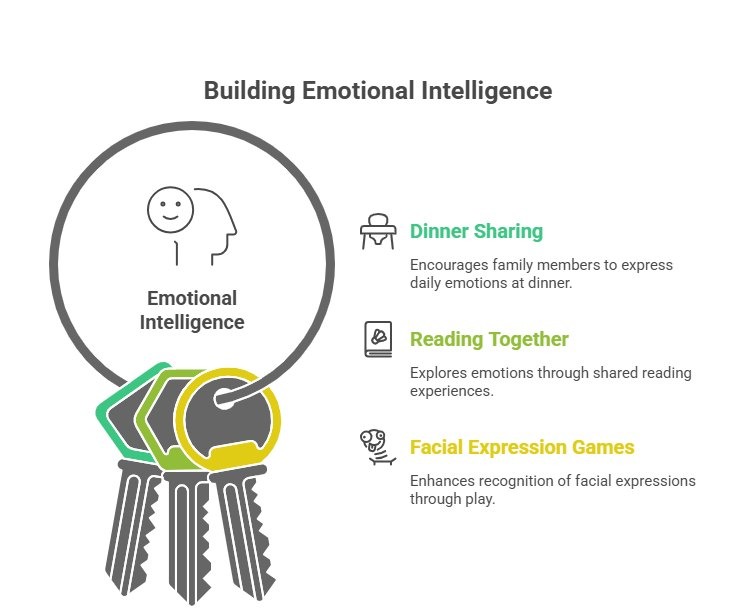
During dinner, ask each member at the table to share one feeling from their day. Reading books together is a practice that explores emotions. Play games that involve recognizing the facial expressions of other people. These everyday moments build emotional awareness steadily.
Home and School Integration
Many schools now run social and emotional learning programs. Ask your school what they are doing. Then reinforce it at home. This consistency accelerates how fast your child develops emotional intelligence skills.
Real-Life Examples
I have discovered that using emotional intelligence examples from real life sticks better than lectures. When you see someone handle disappointment gracefully, point it out: “Did you notice how she stayed calm?” When someone shows empathy, acknowledge it. These moments teach more than anything else.
Emotional Intelligence in Relationships
Emotional intelligence helps people understand each other better and build stronger, more caring relationships.
Improving Social Skills
Kids with high emotional intelligence get invited to birthday parties more often. They make friends easier. They know how to listen, ask questions, and show genuine interest in others. These are not magic talents. They are the skills you can develop in your child.
Strengthening Bonds
Emotional intelligence also transforms family relationships. In a family in which everyone understands and respects each other’s feelings, conflict happens, but they manage and it does not damage the bond. That’s powerful.
Testing and Progress
Testing and progress show how well someone is growing and what they still need to work on.
Understanding EQ Tests
An emotional intelligence assessment is not pass or fail. It shows strengths and areas for growth. Some measure how well kids recognize emotions. Others evaluate their ability to handle stress. The American Psychological Association offers guidance on these tools.

Recognizing Growth Signs
You do not need a formal test to see progress. In my experience, watch for these shifts: Does your child name feelings more often? Do they bounce back from setbacks faster? Are friendships deeper? Is homework time less stressful? These changes show that building emotional intelligence is working.
Frequently Asked Questions
Can emotional intelligence be taught, or is it something you are born with?
Both. Emotional intelligence has a genetic component, but research proves it can absolutely be developed through training and consistent practice throughout childhood and beyond.
At what age should I start developing emotional intelligence in my child?
Right now. Even toddlers benefit from learning to name feelings. The earlier you start, the easier it becomes, though kids of any age can improve their emotional intelligence skills.
If my child has low emotional intelligence, does that mean they will struggle forever?
No. Some children have low emotional intelligence. You can make dramatic improvements with patience and the right guidance. It just takes longer than starting early, but progress is possible.
How do I balance building emotional intelligence with setting boundaries?
Emotional intelligence and boundaries work together. Understanding the emotions of your child never means letting them break rules all the time. You can value their feelings while maintaining limits and boundaries. For example: “I see you are angry, and you still cannot hit.
Conclusion
Emotional intelligence shapes how children live, behave, and get along with others as they grow up. It impacts academics, friendships, mental health, and career success. You can actively build emotional intelligence. You do not need expensive programs or special training.
You need awareness, consistency, and patience. Start where you are. Notice your child’s emotions. Help them to realize clearly what they feel. Model how to handle big feelings without panicking. Ask them open questions instead of giving lectures.
Celebrate progress, no matter how small the steps. Developing emotional intelligence is not about making someone perfect to handle every situation. It’s about creating an environment where everyone’s feelings matter, where self-awareness grows, and everyone is respected, plus where emotional skills get practiced daily.
You are building a base that lasts for a lifetime. Years from now, your child will not remember every homework assignment, but they will remember that you taught them to understand themselves and respect everyone. That’s the real education that every child deserves to be taught.
Sources: CASEL Fundamentals of Social and Emotional Learning, American Psychological Association, Daniel Goleman’s Emotional Intelligence Research